
Dizasta Vina: Tanzania’s storytelling hip‑hop maverick
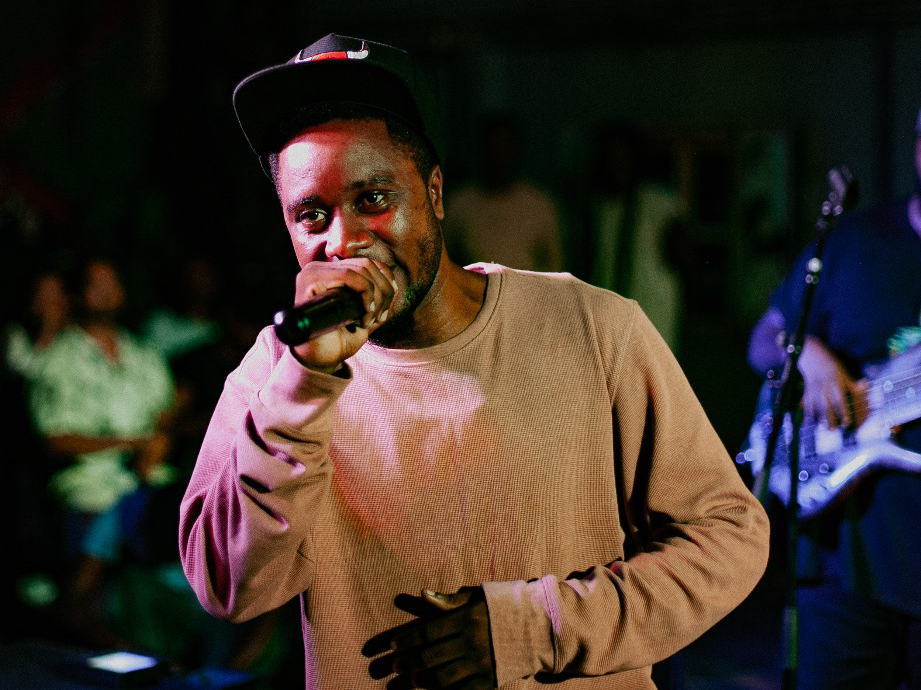
By Emmanuel Msabaha
Originally published in Daily News (October 19, 2025)
In the vibrant streets of Dar es Salaam and the quieter corners of Iringa, a distinct sound began to rise, one that didn’t aim just to entertain, but to reflect, provoke and narrate. That voice belonged to Dizasta Vina, born Edgar Vicent Mwaipeta on February 17, 1993, in Iringa, Tanzania. From the start, Dizasta’s music has been rooted in storytelling. He isn’t about catchy hooks or club bangers; instead, he crafts lyrical journeys drawn from the lived Tanzanian experience.
As outlined on his website, his lyricism is steeped in philosophy, moral insight and social commentary, touching on everything from gender inequality and poverty to HIV, street life and corruption. A cultural foundation and early rise of Nyakyusa heritage, Dizasta grew up immersed in a rich cultural landscape. He sharpened his skills in local rap battles, notably gaining attention in the SM Straight Music Freestyle Battle in 2010.
His official debut came in 2012 with the single ‘Harder’, a track that marked a turning point for Tanzanian hip-hop. His sound stood out for its fusion of gritty hip-hop aesthetics with local rhythms and authentic vernacular. Platforms like Viberate have noted how he uniquely blends traditional African instrumentation with modern production, a style both rooted and refreshing. What truly sets Dizasta apart is his embrace of his self-style: ‘The Verteller’, the storyteller.
His 2020 album, ‘The Verteller’, isn’t just a compilation of tracks; it’s a conceptual arc exploring life stages, birth, growth, struggle, redemption and even death.
Songs like ‘Mwanajua’, ‘Kibabu na Binti’, ‘Tatoo ya Asili’ and ‘A Confession of a Mad Son’ delve deep into social issues. In ‘Tatuu ya Asili’, he confronts the moral decay among youth and the trauma of sexual violence.
Muscular Feminist flips the script on traditional gender roles. His message is clear: “Sehemu ambayo elimu itadharauliwa… ndio sehemu ambayo matatizo yataibuka” — (Where education is disregarded, problems will arise).
Forging an Independent Path in a musical landscape driven by commercial labels and marketing machines, Dizasta has taken the road less travelled. His 2024 album, A Father Figure, featured 21 self-produced tracks and was distributed independently via WhatsApp, hardcopy and email, deliberately bypassing major streaming platforms. Why this route? Because, in his words, he values a committed fan base over fleeting chart success.
“I have fans who support me… I sell albums first before streaming,” he shared in an interview.
His independence has become a hallmark and despite minimal radio play or label backing, his reputation continues to rise.
Veteran Tanzanian emcees like Farid Kubanda (Fid Q), Harry Harrison Kaale (One the Incredible) and Khery Sameer Rajab (Mr Blue) have publicly praised him as one of the finest lyricists of his generation.
Dizasta Vina is redefining Tanzanian hip-hop. For him, the genre is more than danceable rhythms; it’s a platform for cultural memory, critique and dialogue.
A father figure has been hailed by critics and fans alike as one of the most important hip-hop albums in Tanzanian history. Take ‘Mbuzi’, for example. It metaphorically explores the themes of parenting and nurturing relationships while people are still alive, a reminder of life’s fragility.
His lyrics often read like short stories, rich with metaphor, conflict and introspection. In Confession of a Mad Philosopher, he pulls no punches: ‘Uhuru si kitu halisi’ — (Freedom is not a tangible thing.)
As of May 2025, he released ‘Karibu Duniani’, continuing his evolution as both artist and thinker. With each release, Dizasta invites listeners deeper into a space where hip-hop becomes a tool for reflection, transformation and truth.
What lies ahead for Dizasta Vina? More layered narratives. Deeper philosophical dives. Perhaps a broader reach, mainstream success without compromise. In a musical world often dominated by superficial trends, his voice is a necessary counterbalance: Thoughtful, unfiltered and unrelenting.
Dizasta Vina isn’t just a rapper. He’s a chronicler of his time, a hip-hop griot, capturing the complexities of Tanzanian life in rhyme and rhythm.
For listeners hungry for substance over spectacle, his journey is one to follow. Because when you listen to Dizasta, you’re not just hearing music, you’re hearing a call to awareness, identity and human connection.
And in the evolving story of African hip-hop, that’s a voice worth paying attention to.

Teacher 🖊
Kichwa ASSET, kichwa PANGA, JEMBE na SHOKA.
Jangaa
One of the best to ever do it.
Toka na vitambi vyenu maboss mtakuwa nyinyi, hata msiponijua MITAA itanijua MIMI
Dizasta vina uwezo wako ni mkubwa sana